-
$7.00
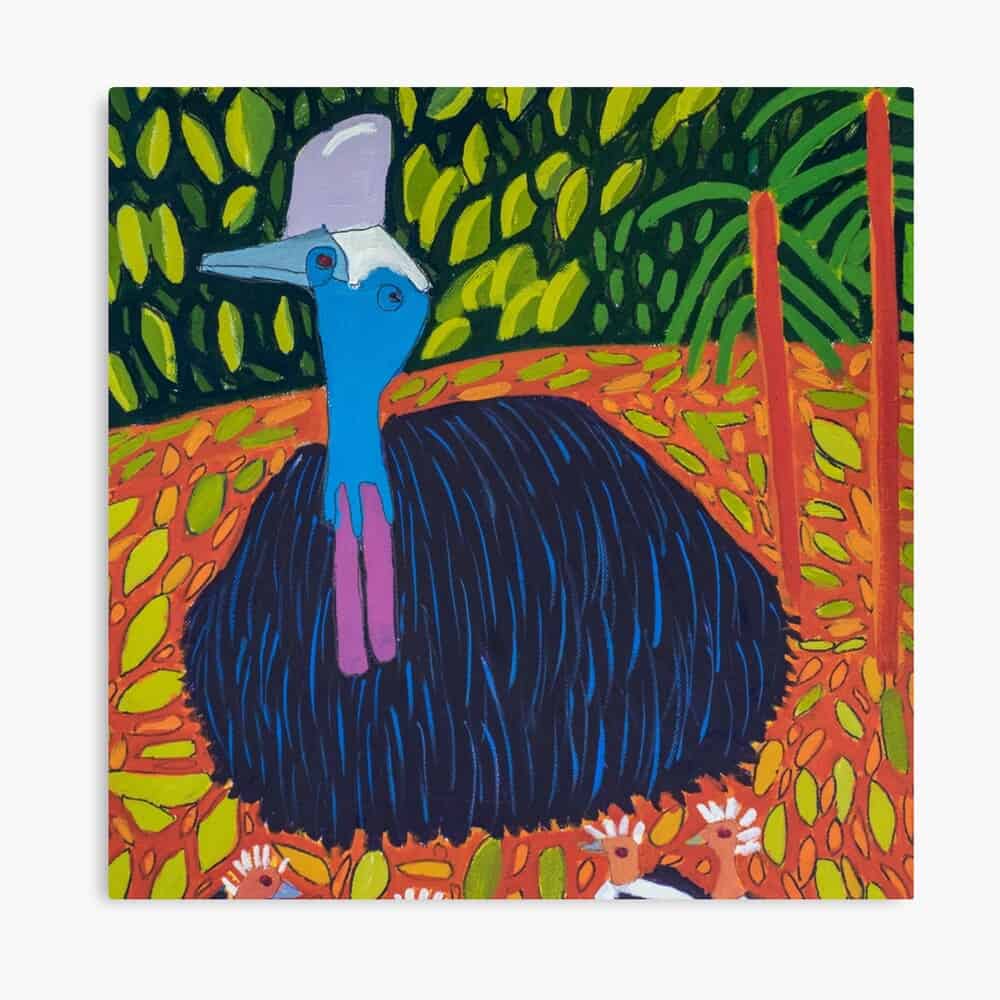
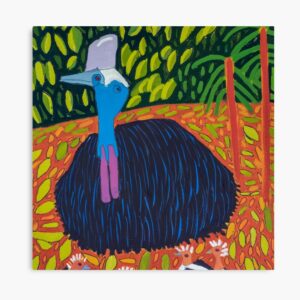
In 2021 our badge featured the Southern Cassowary (also known as the Dinosaur Bird) in recognition of the UN Year of Fruits & Vegetables. This large, flightless bird was chosen as the featured species as it has a diet based almost exclusively on fruit and is listed as Endangered despite the fact it plays a key role. The Southern Cassowary lives in the rainforests of North East Queensland and is considered a Keystone Species (playing a key role in the ecosystem) because it eats the fallen fruit of many rainforest species and distributes the seeds across the forest floor. The germination rate of seeds from some rare Australian rainforest trees have a hugely increased germination rate after passing through the cassowary’s gut.
This species needs help. What can you do to help protect the Cassowary?
Our special thanks to Zion Levy Stewart for the use of this beautiful image. For more artwork by Zion, go to www.zionart.com.au
-
$7.00
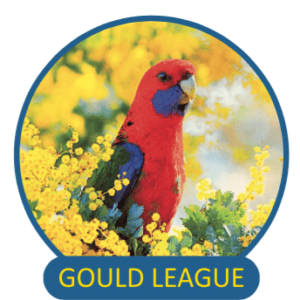
Crimson Rosella in a Golden Wattle Tree Badge (2020) celebrates the UN year of Plant Health as without healthy plants, there is no oxygen, food or homes for birds and wildlife.
Let’s all plant trees to help give wildlife a home – especially in areas affected by the bushfires and urban sprawl.
-
-
$7.00
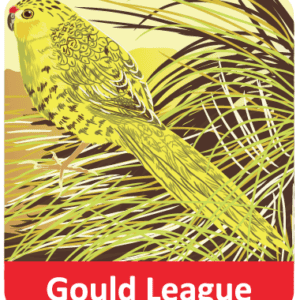
Eastern Ground Parrot (2023)
The Eastern Ground Parrot (Pezoporus wallicus) was chosen in 2023 in recognition of the United Nations International Year of Millets.
Millets are incredible plants that are drought tolerant, encourage healthy soil biota and microbes and provides habitat for the Eastern Ground Parrot. This secretive little parrot inhabits south-eastern Australia from southern Queensland through NSW to western Victoria. It also previously lived in South Australia but has not been recorded since 1945. Across Australia populations have declined due to habitat destruction through fires and land clearing, and predation by foxes and cats. In Victoria it was listed as endangered in 2020 and is considered in significant decline. It’s now contracted to islands of coastal or sub coastal heathland and sedge land habitats.
The Eastern Ground Parrot is one of only five ground-dwelling parrots in the world. The others being the western ground parrot, extremely rare Night Parrot, the Antipodes parakeet, and the highly endangered Kakapo from New Zealand.
Other badges include:
- Green and Gold Bell Frog Badge (2000)
- Whale (2002)
- Dolphins (2004)
- Sugarglider (2005)
- Koala (2006)
- Wombat (2007)
- Saltwater Crocodile (2010)
- Orchid (2011)
- Brolga (2012)
- Leadbeater’s Possum (2013)
- Seastar (2014)
- Tiger Quoll (2016)
- Swift Parrot (2017)
- Leaf Tail Gecco (2018)
- Fairy Wren (2019)
- Crimson Rosella in Golden Wattle Tree (2020)
- Cassowary (2021)
- Weedy Seadragon (2022)
- Eastern Ground Parrot (2023)
- Yellow Footed Rock Wallaby (2024)
Want to get the latest now? Why not become a member to get the latest one! 2025 is a Little Penguin!
-
$7.00
Green and Gold Bell Frog Badge (2000)
Other badges include:
- Gould League 100 year anniversary 1909 – 2009
- Whale (2002)
- Dolphins (2004)
- Sugarglider (2005)
- Koala (2006)
- Wombat (2007)
- Saltwater Crocodile (2010)
- Orchid (2011)
- Brolga (2012)
- Leadbeater’s Possum (2013)
- Seastar (2014)
- Tiger Quoll (2016)
- Swift Parrot (2017)
- Leaf Tail Gecco (2018)
- Fairy Wren (2019)
Want to get the latest now? Why not become a member to get the latest one! 2020 is a Crimson Rosella in a Golden Wattle Tree. It’s stunning…and a must have to add to any collection!
-
$7.00
Leadbeater’s Possum Badge (2013)
-
$7.00
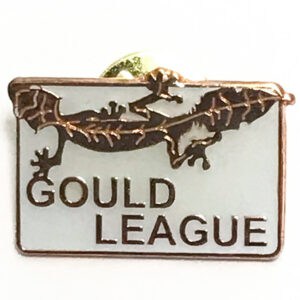
Leaf Tailed Gecko Badge (2018)
-
$7.00
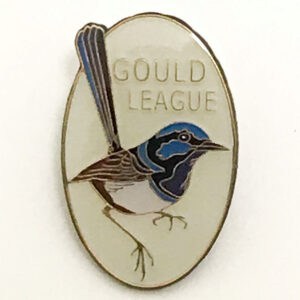
Supurb Fairywren Badge (2019)
Did you know the adult male Superb Fairywren is one of the most brightly coloured of the species, especially during the breeding season? They have rich blue and black plumage above and on the throat. Their belly is grey-white, and their bill is black. Females and young birds are mostly brown with a dull red-orange area around the eye and a brown bill. Females have a pale greenish gloss, absent in young birds, on the otherwise brown tail. The legs are brown in both sexes. Males from further inland and in the south-west of the Great Dividing Range have more blue on their back and underparts.
If you want to attract Superb Fairy-wrens to your garden, they like to live in bushy trees or thickets with prickly branches or leaves about a meter off the ground, to provide a place to retreat from danger (especially cats) and to build a nest. They like to eat insects, especially grasshoppers so you can help them by having an area of lawn or leaf mulch to attract insects as a readily available food supply for them. Avoid using garden pesticides which kill insects. In summer, don’t forget to provide a tub of water so they can bath and drink from it.
Don’t be surprised if one colourful male seems to be accompanied by a harem of brown birds. These are juvenile males and females and a breeding female. Keep an eye out on the males, it’s not unusual for them to fight their own reflection in windows during the breeding season!
-
$7.00
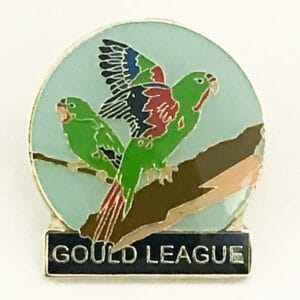
Swift Parrot Badge (2017)
Swift Parrots breed only in Tasmania and then fly across Bass Strait to forage on the flowering eucalypts in open box–ironbark forests of the Australian mainland. While on the mainland, they are nomadic, spending weeks or months at some sites and only a few hours at others, determined by the supply of nectar. During dry years, when the eucalypts’ flowering is poor, Swift Parrots are forced to travel far and wide to find sufficient food, and may congregate into large flocks at sites where it is available.
-
$7.00
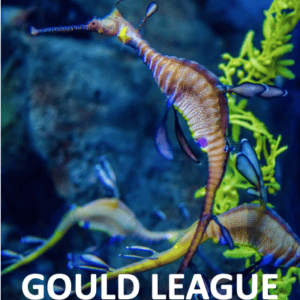
2022 Badge – Weedy Seadragon
2022 was gazetted by the UN as the year Artisanal Fisheries and Aquaculture. With this in mind, we chose a unique species – but one that is local and special not just to us, but all Australians. It’s the Weedy Seadragon. You may recall last year Sir David Attenborough lent his support to a Mornington Peninsula community’s battle to prevent the partial demolition of a wooden jetty, arguing it provides valuable habitat for the threatened Weedy Seadragon.
Find out more about the Weedy Seadragon at https://portphillipmarinelife.net.au/species/8007 and https://www.scubadoctor.com.au/weedy-seadragons-melbourne.htm