
Hazards and Disasters in the Forest (VCE Geography Unit 1)
-
Forest
-
Human Impacts
Excursion Program Overview
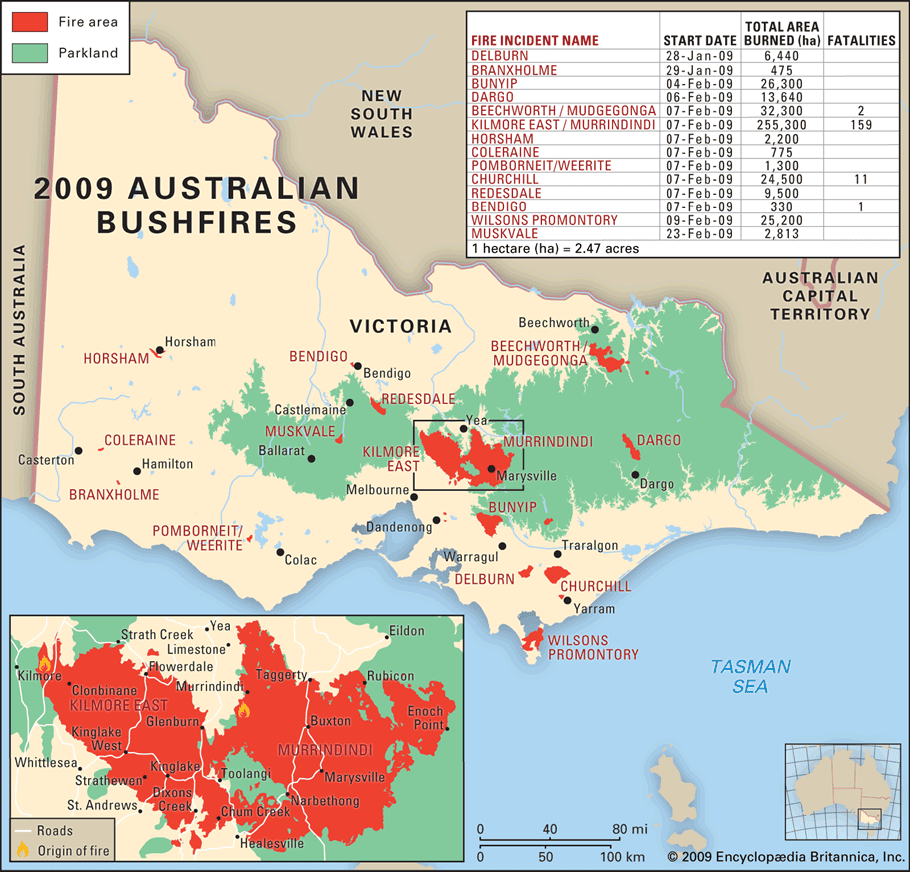
Months of hot and dry conditions in south-eastern Australia led to a heatwave in January 2009. Melbourne’s temperature peaked at 45.1 degrees on 30 January, one of the hottest days in the city’s history.
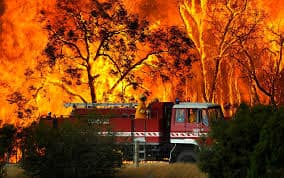
On 7 February 2009 extremely strong winds brought hot air from central Australia and blew down power lines in the Kinglake–Whittlesea area in Victoria. This resulted in many fires breaking out throughout the day. By evening almost 400 fires had broken out across Victoria.
On 8 February many of the fires merged at Kinglake. The fires took weeks to extinguish. A total of 173 people died in the fires, 414 were injured and more than a million animals died. More than 450,000 hectares of land had burned and 3500 buildings including more than 2000 houses, were destroyed. A Royal Commission revealed severe systemic flaws in emergency communication, flawed pre-planning, and the deadly limits of the “stay or go” policy. Its final report issued 67 recommendations, reshaping Victoria’s emergency response, public safety messaging, and land management.
This program specifically looks at the cause and impact of the fires, recovery from the Black Saturday Bushfires and preparedness for future bushfire seasons. We visit sites with contrasting ecological functions and responses to bushfire, and that are at varying stages of recovery. We discuss human responses to the region’s bushfire hazards and disasters, including prediction of risk and vulnerability, planning protection and mitigation, recovery and reconstruction and complete fieldwork activities that will collect primary data for the unit’s SAC requirement.
The Full Day (4 hour) program includes:
- Introduction to the region’s geography and ecology
- Practical fieldwork activities and observations that will be used as primary data for the Fieldwork SAC, using equipment supplied by the Gould League.
- Fuel Hazard Assessments and Vegetation Transects on two sites. Both sites are within walking distance of eachother. Site 1 recently had a fuel reduction burn. Site 2 was burnt in the Black Saturday 2009 fires allowing students to compare a newly burned forest with a forest that has thrived for quite a few years now without fire.
- The use of GNSS technology to locate specific sites for fieldwork activities.
- A visit to Kinglake township and the memorial to grasp how quickly the fire spread, see the direction in which it came, and the impact it had.
- Time for Lunch
- Discussion of bushfire impacts on humans, and their response to that hazard, along with changes made as a result of various Fire Royal Commissions.
Inclusions and Notes
Teacher resources include:
– A guide to fieldwork topics relevant to the data being collected on the excursion, with suggestions for additional resources accessible to students.
– Consultation with Gould League before the program visit to ensure focus is in the desired direction; some alterations may be available to the program by request.
– To save on travel time and to give students the opportunity to investigate forests at different levels of recovery, this program (as of April 2025) now starts as the carpark and toilets at Castellas Central Park on the corner of the Melba Highway and the Healsville Kinglake Road – NOT the Discovery Tree.
Prior knowledge required: Basic functionality of fire. Theoretical understanding of running a transect.
Equipment supplied by Gould League: Safety helmets worn by all participants; workbook and all tools required for fieldwork data collection.
Equipment needed: A chartered bus (which is required to remain with the group at all times). First aid kit, sunscreen, insect repellent and PPE including hand sanitiser to kill bacteria, viruses and microorganisms.
Please note that our Gould League educators will travel on your bus for the duration of your program time. We ask schools to ensure when booking coaches that 1 one seat is allocated for each group booked as they will provide commentary on the bus to students and guide the bus drivers. Please advise the Bookings Manager if there is no room on the coach for our educators, and travel fee of $1 per km will be added to your final invoice. This amount will vary according to the activities undertaken on the day which can vary due to late arrival of buses and or local weather conditions. Travel cost to the Memorial and Masons Falls at Kinglake is $73 ($50.00 if only to the Memorial). This covers the cost of one vehicle only as Gould League Educators will carpool.
Each student needs to bring: Their own water and lunch, sunscreen, a clipboard, pencil, and a copy of the Gould League workbook (usually sent 14 days prior to excursion so copies can be made for students); camera or phone with camera; phone with GNSS capability or GPS; bag to take away your rubbish. Students must also come prepared for all weather conditions, noting it can be colder and wetter in the forest than in the city.
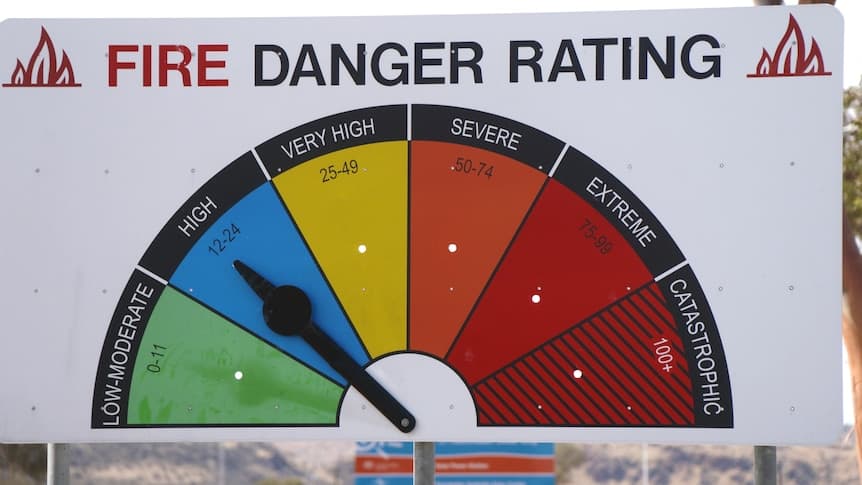
Restrictions: This Gould League program is located in the North Central Fire District and does not operate on days with a Fire danger rating of Extreme or Catastrophic. On rare occasions, programs may be postponed due to extreme weather predictions involving wind/storms. In both cases, these programs will be rescheduled at the earliest convenience of both parties.
Programs however DO operate during wet/snowy weather. Please contact us to discuss the best timing to optimize your group’s experience and ensure suitable clothing and footwear for the conditions predicted. Plan for wet weather from April-October, and expect temperatures at least 5 degrees colder than suburban Melbourne.
Curriculum Links
Key Knowledge for AOS 1 Outcome 1:
- The nature of selected hazards, including:
- physical causes
- location, scale, frequency, magnitude, sequencE
- the role of human activity in initiating and/or compounding the selected hazards and how this has changed over time
- factors affecting the risk level for people, places and environments and impacts of the selected hazards and hazard events on people and environments and how these factors are interconnected
- the potential and realised positive and negative impacts on people and environments in the short and long term
- comparison with similar hazards in other parts of the world
- Applications of spatial technologies by agencies in identification and assessment of impacts, and management of hazards and hazard events.
Key Knowledge for AOS 2 Outcome 2:
- Natural and human factors influencing responses to selected hazards and disasters
- The nature and importance of interactions between natural processes and human activity in developing responses to selected hazards and disasters
- The types of responses to selected hazards and disasters, including prediction of risk and vulnerability, planning protection and mitigation, recovery and reconstruction
- Specific responses by national and global organisations regarding prediction, planning, recovery and reconstruction to similar hazards and disasters in other parts of the world
- Human responses to selected hazards and disasters and how their effectiveness can be measured
- The role of spatial technologies in management of responses to selected hazards and disasters.
VCE Study Design extracts reproduced by permission, © VCAA. VCE is a registered trademark of the VCAA. The VCAA does not endorse or make any warranties regarding this study resource. Current VCE Study Designs, past exams and related content can be accessed directly at www.vcaa.vic.edu.au