
Wild about Nature – School Holiday Incursion
-
Minibeasts
-
Human impacts
-
Worms & compost
-
Biodiversity
-
Lizards
-
Frogs
Let us deliver a multi-age School Holiday Program at your centre where children get to go Wild about the Beach. We will bring the program to you so you don’t have to worry about the extra cost of buses or the additional paperwork and permission slips to take the kids out of your centre!
Choose any 3 of the listed activities so we can make your kids go Wild about Nature!
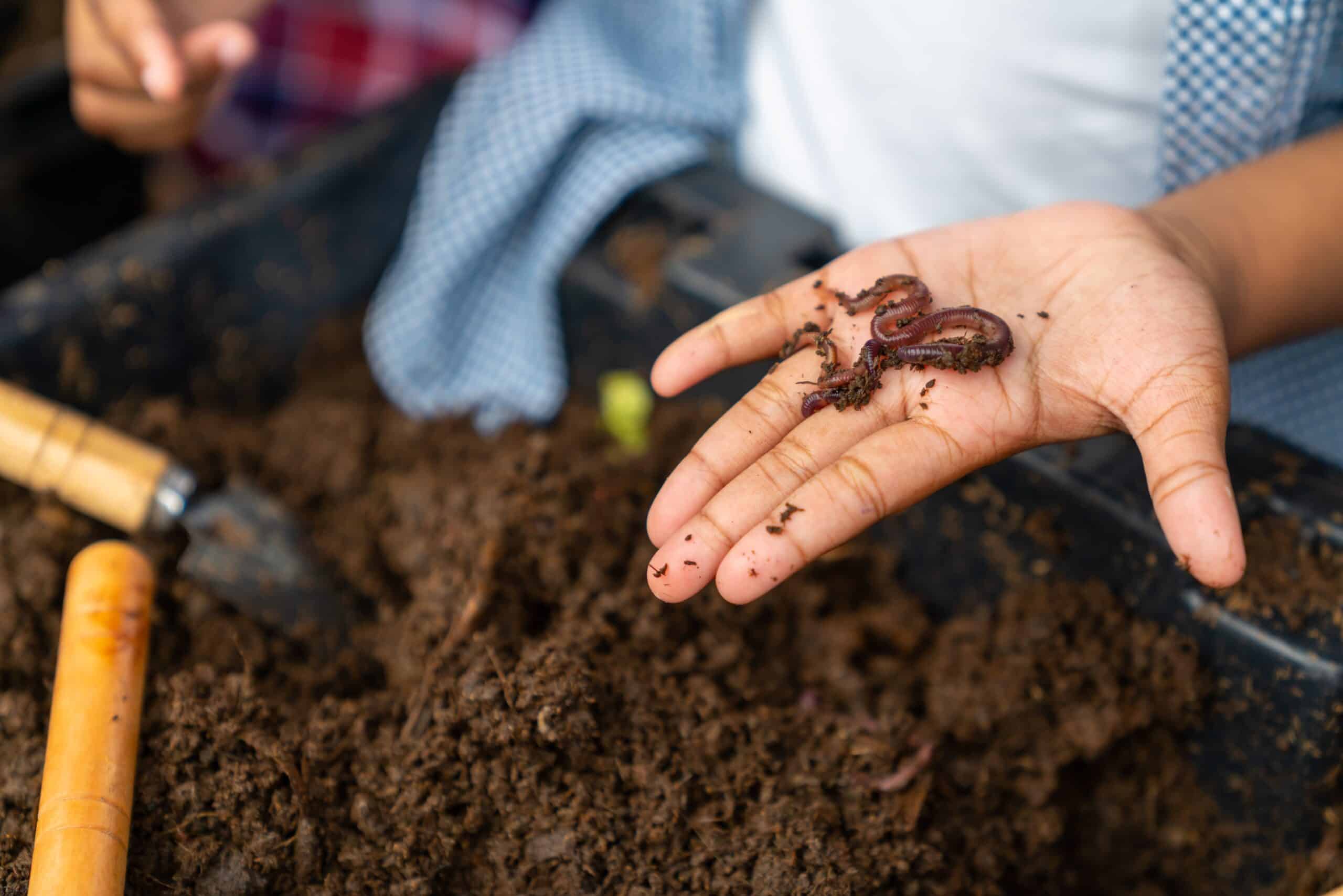
Worms glorious worms. Meet our wriggly worms face to face to understand the importance of composting and soil health. If you are interested, we’ll even show you how to set up your own compost bin or worm farm!
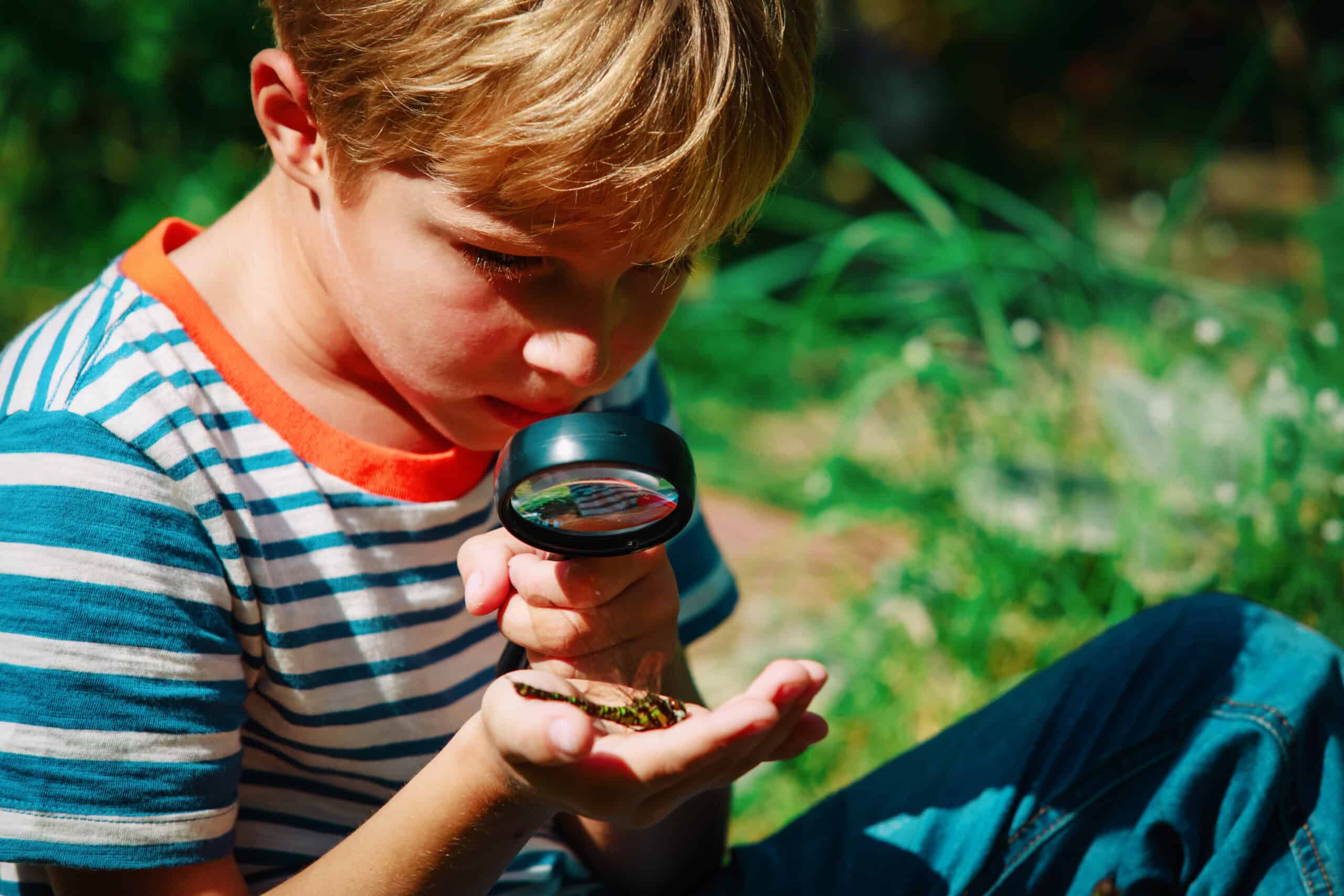
Upclose and personal with minibeasts. This is a wonderful opportunity for children to meet an array of minibeasts including our resident Stick Insects, Scorpion, Giant Burrowing Cockroach and Huntsman Spider. We share the role of minibeasts and what they need to survive before going on a Minibeast Hunt in your garden!
Minibeast Hunt. Students explore your gardens, searching for and collecting amazing minibeasts then observe their live specimens using a video microscope. We have fun exploring body parts and adaptations of a variety of minibeasts.
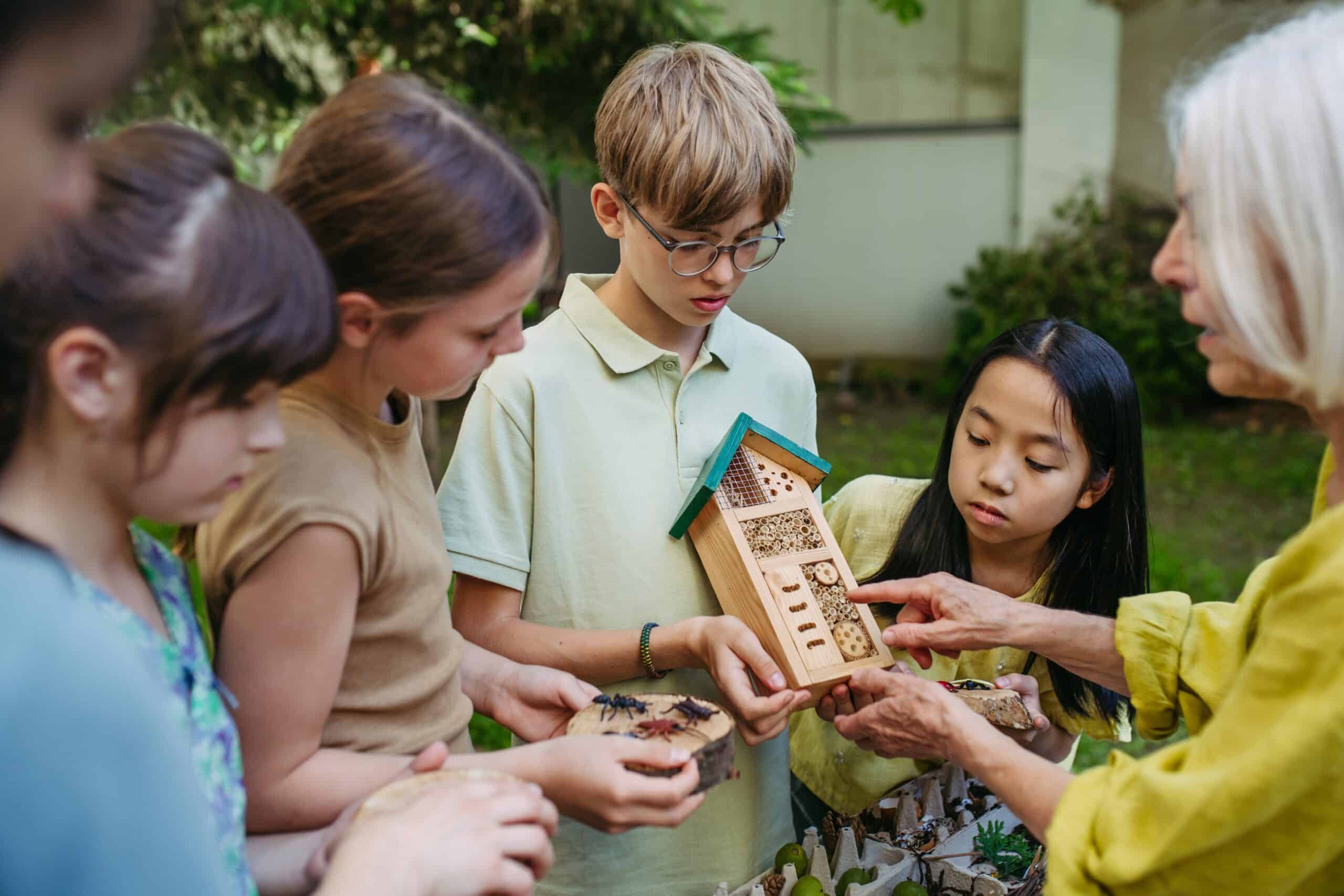
Lounging Lizards – Learn all about lizards. Students also get to make their own lizard motel! Make sure you have your camera ready to photograph their grand designs!
Lifecycle of Fabulous Frogs – Learn all about frogs, including their lifecycle and how to make a frog pond to attract them to your garden!
Humans Impacts & Call to Action
Discuss how human activities can affect and/or disrupt natural links within the environment and let your students determine actions they can adopt to minimise their impact on the environment.
Duration: 2 hours
Inclusions and Notes
Certificate and Conservation Code to reinforce learnings
Post event, each class will be issued a Certificate of Participation and Conservation Code that students are encouraged to sign and hang in the classroom as a reminder of their learnings and their commitment to protect the environment.
We encourage your after school and holiday students to draw pictures of their learnings to take home to their families or send back to Gould League so we can show them to other centres so we can inspire others to also undertake programs and learn all about nature.
Restrictions: Program timing considerations: Staff require 10-minutes between groups to reset activities and a 30-minute break for lunch when more than 2 groups are booked. Available to Melbourne Metro area only.
What to Provide: Multi-purpose room, floor space, whiteboard, access to your garden.
Expected Costs: We charge a fee for each program delivered to your group. In addition to the program cost, there are extra charges to cover return travel from our base in Cheltenham and the time our staff spend travelling and taking paid breaks. Your total cost will depend on how far your service is from Cheltenham and how your daily timetable is structured.
Your quote will clearly list all applicable charges, which may include:
- the program cost per number of groups you have booked
- the cost for the time our educator spends travelling to and from your kinder/centre/school
- the cost for the educator’s time during recess, lunch, or other required breaks
- return fuel costs charged at $0.98 per kilometre
Curriculum Links
Science Understanding: Science as a Human Endeavour
Science knowledge helps people to understand the effects of their actions (VCSSU056)
Science Understanding: Biological Science
Living things have characteristics that distinguish them from non-living things and things that were once living, including fossils VC2S4U01
Plants and animals have different life cycles; offspring are similar, but not identical, to their parents VC2S4U02
Consumers, producers and decomposers have different roles and interactions within a habitat; food chains can be used to represent feeding relationships VC2S4U03
Science Understanding: Earth and Space Science
Water is an important Earth resource that originates from various sources; water cycles through the environment by moving through the sky, landscape and ocean, and involves processes including precipitation, evaporation, transpiration, condensation, melting, freezing, crystallisation, infiltration and run-off VC2S4U07
Science Inquiry: Processing, modelling and analysing
Data and information can be organised and represented to identify patterns and simple relationships by constructing tables, graphs and visual or physical models VC2S4I04
Sciency Inquiry: Questioning and predicting
Observations can be used as a basis for posing questions to identify patterns and relationships, and to predict the outcomes of investigations VC2S4I01
Geographical Knowledge | Diversity of places and environments
The relationships between people and their place and its environment VC2HG4K01
The importance of environments, including natural vegetation and water sources, to people and animals in Australia and on another continent VC2HG4K03
Sustainability and its application to the use of natural resources and the management of waste VC2HG4K09
Geographical Skills – Geographical Inquiry
identify and develop questions to guide a geographical inquiry on the diversity of places and environments VC2HG4S01
locate, collect and record information and data from a range of sources, including from fieldwork, maps, photographs and graphs VC2HG4S02
Represent and analyse information and data collected in different formats VC2HG4S03
Citizenship Knowledge and Understanding: Diversity and Understanding
Why people participate within communities and how students can actively participate and contribute to communities VC2HC4K07
English: Language for interacting with others
Understand that cooperation with others depends on shared understanding of social conventions, including turn-taking language, which vary according to the degree of formality VC2E3LA01
English: Literacy Interacting with others
Use interaction skills to contribute to conversations and discussions to share text- or topic-based information and ideas VC2E3LY01
The Victorian Curriculum F-10 content elements are © VCAA, reproduced by permission. Victorian Curriculum F-10 elements accurate at time of publication. The VCAA does not endorse or make any warranties regarding this resource. The Victorian Curriculum F-10 and related content can be accessed directly at the VCAA website.