
Wild about the Beach – School Holiday Incursion
-
Marine Life
-
Human impacts
-
Shark Teeth & Fossils
-
Blue Ringed Octopus
Let us deliver a multi-age School Holiday Program at your centre where children get to go Wild about the Beach. We will bring the program to you so you don’t have to worry about the extra cost of buses or the additional paperwork and permission slips to take the kids out of your centre! Check out this Reel about what you can do!
WILD FOR THE BEACH
Choose any 3 of the listed activities so we can make your kids go Wild for the Beach! We also suggest a post incursion activity you can run in your centre to extend marine themed activities.
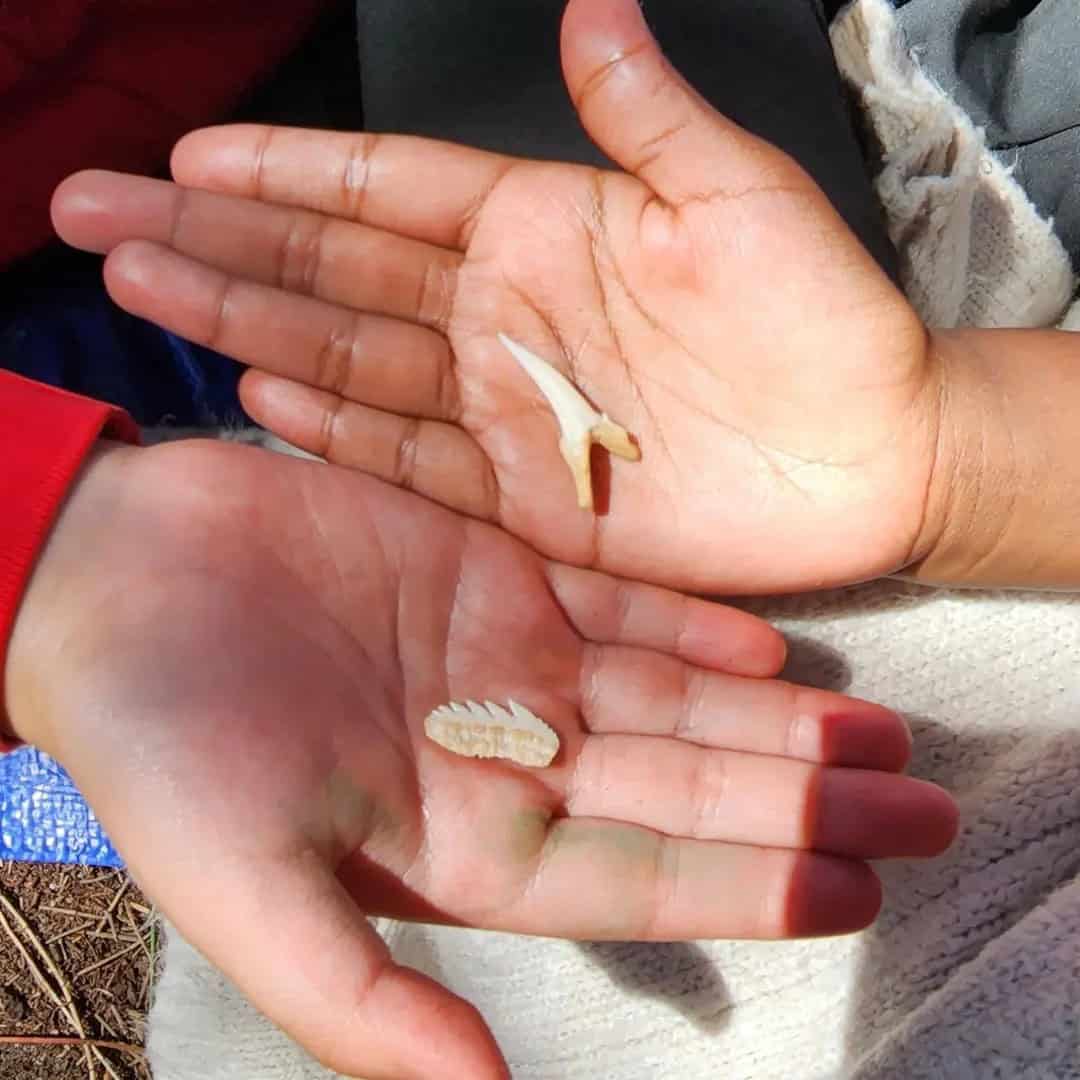
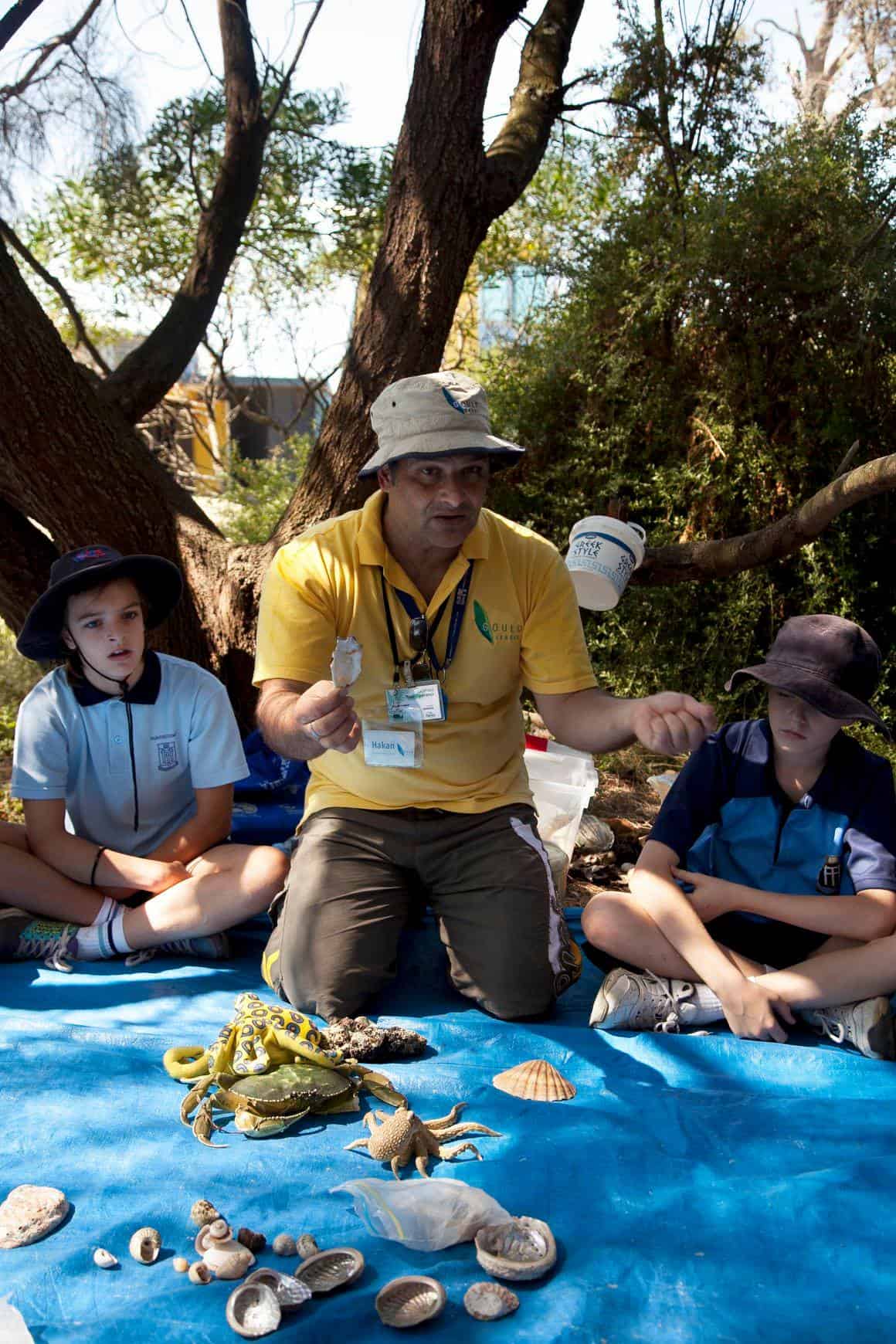
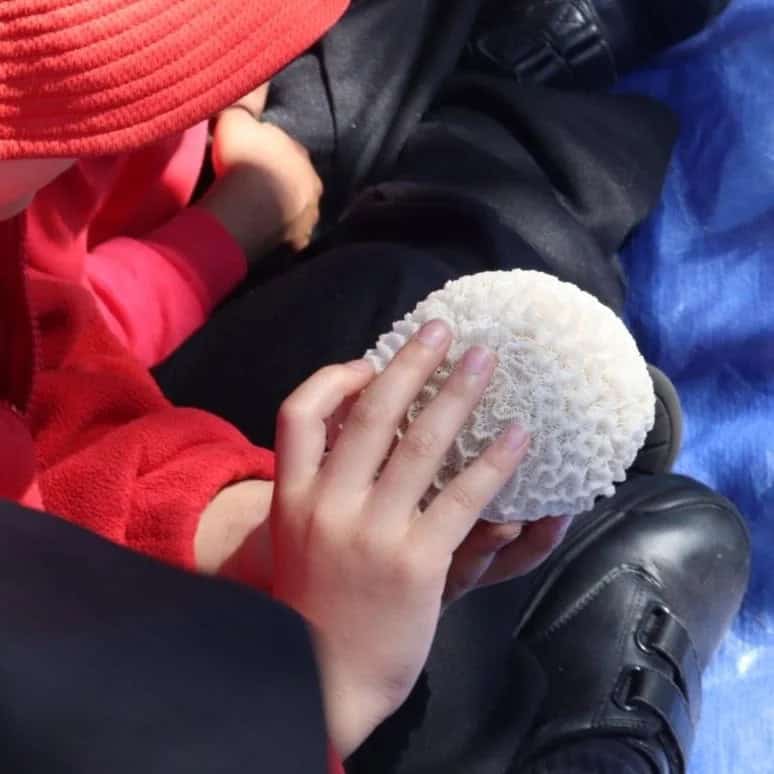
Beach Box: Inspect our collection of preserved ocean treasures such as sharks teeth, shells and preserved specimens such as a blue ringed octopus and identify the features that help these marine creatures survive in intertidal zones and rock platforms.
Creature Features: Life in an intertidal zone or rockpool platform is a daily battle. Students will be introduced to some of the unique features of beach inhabitants and how these aid in feeding, movement and defence. Through group collaboration, students will also have the opportunity to design their own marine creature!
Seagulls vs Hermit Crabs: Experience first-hand the harsh reality of life in the intertidal environment. Who will survive to see another day? You’ll have to be fast and keep your wits about you! What can we do to help keep the balance right? This is a game of tag with a difference.
Marine Timeline: Have you ever thought about how long it takes for waste to break down in our oceans? This activity gets students to work out how long it takes for everyday items that end up in our oceans to break down. Some items can take hundreds of years to break down, so it’s a fun way to learn some really important lessons about how to keep waste out of our oceans!
Story of the Ocean: Most people have never considered how pollutants and waste get into our oceans. This hands-on activity gives students the chance to understand how humans are polluting our creeks, rivers and ultimately our oceans, one waste stream or pollutant at a time. It’s not all bad news though, as it also allows them to explore what they can do to prevent this, – whether it’s by picking up after their dogs, not using pesticides or putting their rubbish in the bin!
Program concludes with:
A Call to Action
Students are empowered to create positive change around waste reduction and our shared environment.
Notes and Inclusions
Duration: 2 hours
Program timing considerations: Staff require 30 mins set up and 30 mins pack up, 15-minutes between groups to reset activities and a 15-minute break for lunch when more than 2 groups are booked.
What to Provide: Car park, multi-purpose room, floor space, 3 tables, aid or trolley to help carry equipment to deliver program.
Certificate and Conservation Code to reinforce learnings
Post event, your after school care students will be issued a Certificate of Participation and Conservation Code for each class which students are encouraged to sign and hang in the classroom as a reminder of their learnings and their commitment to protect the environment.
Suggested activity for your school or holiday care program to deliver post incursion!
Waste Ahoy Poster Design: Ask students to think about the waste in our ocean from the perspective of a fish, turtle or whale. They will have learnt how plastic waste enters our oceans, and how to prevent it – so why not get them to make a poster to show others how to care for and protect our oceans so they can be enjoyed by future generations! And don’t forget to share the winning posters with us as we love to share these on social media as it inspires others to take action!
Expected Costs: We charge a fee for each program delivered to your group. In addition to the program cost, there are extra charges to cover the return travel from our base in Cheltenham, as well as the time required for our staff to travel and take paid breaks. Your total cost will depend on how far your service is from Cheltenham and how your daily timetable is structured.
Your quote will clearly list all applicable charges, which may include:
- the program cost per number of groups you have booked
- the cost for the time our educator spends travelling to and from your kinder/centre/school
- the cost for the educator’s time during recess, lunch, or other required breaks
- return fuel costs charged at $0.98 per kilometre
Victorian Curriculum Links
SCIENCE: Science Understanding
– Science knowledge helps people to understand the effects of their actions (VCSSU056)
– Living things can be grouped on the basis of observable features and can be distinguished from non-living things (VCSSU057)
– Different living things have different life cycles and depend on each other and the environment to survive (VCSSU058)
SCIENCE: Science Inquiry Skills
– Represent and communicate observations, ideas and findings to show patterns and relationships using formal and informal scientific language (VCSIS072)
GEOGRAPHY: Geographical Knowledge
– Types of natural vegetation and the significance of vegetation to the environment, the importance of environments to animals and people, and different views on how they can be protected; the use and management of natural resources and waste, and different views on how to do this sustainably (VCGGK082)
– Similarities and differences in individuals’ and groups’ feelings and perceptions about places, and how they influence views about the protection of these places (VCGGK083)
SUSTAINABILITY – Interrelationship of systems
– All lifeforms are connected through Earth’s systems (the lithosphere, biosphere, hydrosphere and atmosphere), on which they depend for their wellbeing and survival. VC2CCPSIS1
– Sustainable patterns of living require the responsible use of resources; circular economies; maintenance of clean air, water and soils; and the restoration of healthy environments and habitats with ecological integrity. VC2CCPSIS2
– Economic, social, environmental and cultural systems influence the sustainability of Earth’s systems. VC2CCPSIS3
The Victorian Curriculum F-10 content elements are © VCAA, reproduced by permission. Victorian Curriculum F-10 elements accurate at time of publication. The VCAA does not endorse or make any warranties regarding this resource. The Victorian Curriculum F-10 and related content can be accessed directly at the VCAA website.